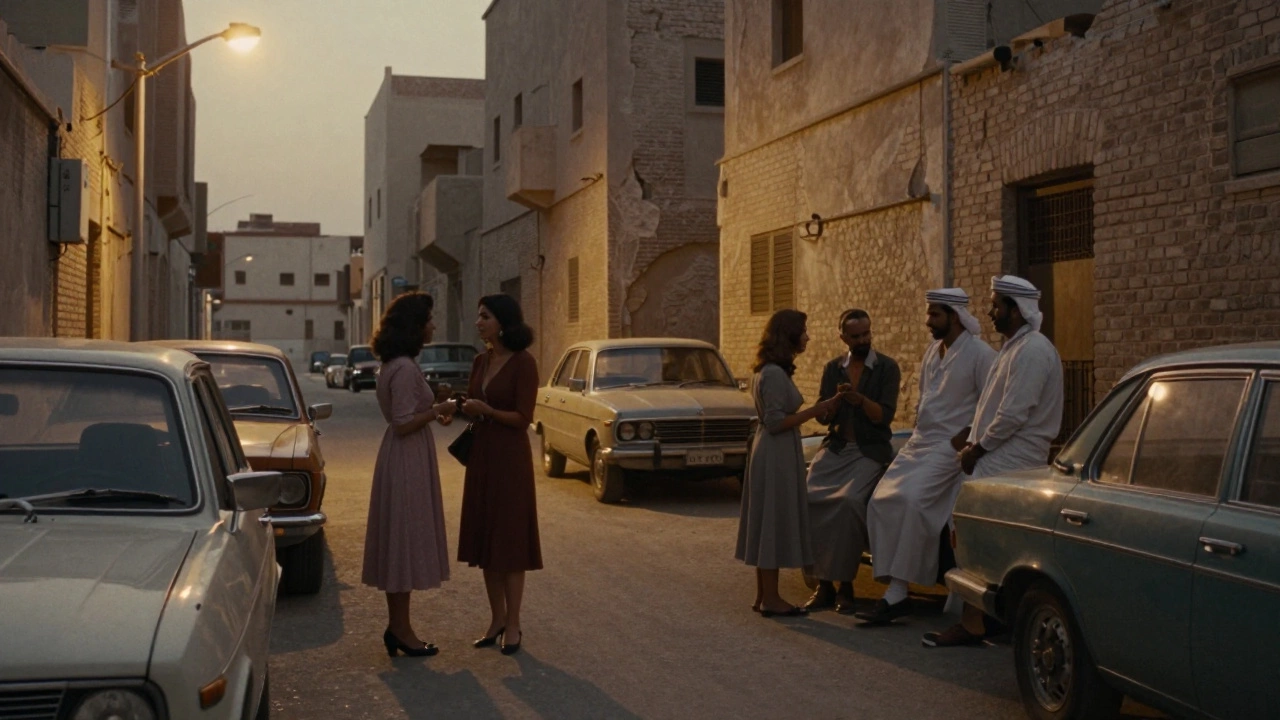
Dubai didn’t rise from sand and oil alone. Behind its glass towers and luxury malls lies a hidden layer of history-one built on trade, migration, and the quiet persistence of sex work. Long before the Burj Khalifa scraped the sky, the city’s economy relied on networks of women who offered companionship, intimacy, and services to sailors, merchants, and foreign workers. Today, those networks have changed form, but they haven’t disappeared. The same streets that once echoed with whispered deals now host discreet apps and encrypted messages. The shift isn’t just legal-it’s cultural, economic, and deeply human.
If you’ve ever wondered what the modern underground looks like, you might stumble across sites offering call girls in dubai, but those are just the visible tips of a much older iceberg. What’s changed isn’t the demand-it’s the rules. In the 1970s, Dubai was a port town with loose borders and little regulation. Foreign workers poured in, and so did the women who served them. Many came from South Asia and Eastern Europe, fleeing poverty or violence, drawn by the promise of cash. Some worked openly. Others vanished into private apartments, their names never recorded. Back then, police turned a blind eye. Not because they approved, but because the city needed them.
The Legal Gray Zone That Keeps Dubai Running
Dubai’s laws don’t mention prostitution outright, but they don’t allow it either. The Penal Code bans public indecency, solicitation, and operating brothels. That’s why today’s sex work exists in a legal fog. There are no licensed establishments. No street corners where clients gather. Instead, it’s all arranged through private channels: WhatsApp groups, Instagram DMs, and paid membership apps. Clients pay upfront. Escorts arrive in taxis. Payments are digital. No cash. No receipts. No paper trail. It’s efficient. It’s safe-for the business side.
The women who do this work aren’t criminals in the eyes of their communities. They’re providers. Many send money home to families in Nepal, Ukraine, or the Philippines. Some are students. Others are single mothers. A few are expats who moved to Dubai for the salary and stayed because they found a way to survive. The city doesn’t arrest them unless they’re loud, visible, or caught with a foreign passport that’s expired. Most operate under radar. And the system? It works.
From Back-Alley Deals to App-Based Escorts
Twenty years ago, finding an escort in Dubai meant asking a hotel doorman or a taxi driver. Today, it’s a few taps on a phone. Apps like Pure, Seeking Arrangement, and private Telegram channels have replaced the old methods. Profiles are minimal: age, height, language, price range. Photos are curated. No last names. No addresses. Just a meeting point-usually a hotel room rented under a fake name, or a private apartment in Jumeirah or Dubai Marina. The clients? Mostly expats. Engineers, consultants, sales reps. Men who travel often, earn well, and crave connection without commitment.
One woman, who asked to remain anonymous, told me she earns three times what she made as a nurse back in Moldova. She works three nights a week. Pays her rent. Sends money to her daughter. Doesn’t drink. Doesn’t do drugs. Doesn’t talk to clients about her life. She’s not a victim. She’s a business owner. And she’s not alone. There are hundreds like her. Some even have LinkedIn profiles. They’re not hiding because they’re ashamed. They’re hiding because the law says they must.

The Rise of the ‘Call Girl Dubai’ Economy
It’s not just about sex. It’s about service. Many women who advertise as escorts in Dubai offer more than physical intimacy. They offer conversation. They offer company. They offer a break from loneliness. In a city where 90% of the population is foreign-born, isolation is common. Men who work 14-hour days in construction or finance don’t have time for dating apps that require emotional labor. They want someone who’s polite, clean, and knows how to be quiet. That’s the real product being sold.
Prices range from 800 AED to 3,000 AED per hour, depending on experience, appearance, and location. The higher-end providers often have professional photos, personal websites, and even reviews. Yes, reviews. Clients rate them on punctuality, hygiene, and discretion. It’s like Uber, but for companionship. And just like Uber, the platform doesn’t employ them-they’re independent contractors. No benefits. No contracts. No protection.
That’s why some women hire lawyers to draft private agreements. They include clauses about payment timing, cancellation policies, and confidentiality. One woman I spoke with keeps a signed copy of every client’s ID on file-not because she’s paranoid, but because she’s smart. If something goes wrong, she needs proof she didn’t solicit. She didn’t initiate. She just responded.
How Dubai’s Crackdowns Changed the Game
There was a time when Dubai police raided apartments and deported women en masse. In 2017, over 300 foreign women were arrested in a single operation. Most were from Nigeria and Ukraine. They were held for weeks, then deported without trial. The crackdown made headlines. But it didn’t stop the trade. It just made it smarter.
Now, the industry has adapted. Women avoid hotels with security cameras. They use burner phones. They meet in areas with poor surveillance. Some even rent apartments under the names of male friends. The police know what’s happening. They just don’t have the resources-or the political will-to shut it down completely. Dubai’s economy depends on tourism, real estate, and foreign labor. Arresting every woman who offers companionship would hurt more than it helps.
What’s surprising is how little public outrage there is. Locals rarely comment. Expats whisper about it over coffee. No one talks about it in the media. The government doesn’t acknowledge it. And yet, it’s everywhere. You can’t walk through the Dubai Mall without seeing a woman in a designer dress waiting for a ride. You can’t open a hotel elevator without seeing a man in a suit holding a bouquet. They’re not always together. But sometimes, they are.

The Human Cost Behind the Glamour
Not every story ends well. Some women get trapped. Some are exploited by agents who take 70% of their earnings. Others are scammed by fake clients who record them and threaten to share the videos. There are cases of violence. Of kidnapping. Of deportation with no support system. But these aren’t the norm. They’re the exceptions. Most women who enter this work do so with eyes open. They know the risks. They’ve calculated them. And they’ve decided the payoff is worth it.
One woman, who left Syria after her husband died in the war, now lives in a studio apartment in Al Barsha. She works as a freelance translator during the day. At night, she’s an escort in dubai. She doesn’t see it as a contradiction. She sees it as survival. Her English is flawless. She reads Nietzsche. She watches TED Talks. She doesn’t want pity. She wants to be seen as someone who made a choice-and lived with it.
Dubai’s Future: Will This Ever Be Legal?
Legalization isn’t on the horizon. Not because it’s immoral, but because it’s politically impossible. The UAE’s leadership answers to conservative religious leaders, international investors, and a global image that demands purity. But the reality on the ground? It’s messy, human, and unignorable.
Some experts believe Dubai will eventually adopt a model like the Netherlands or New Zealand-where sex work is decriminalized, regulated, and taxed. Others say the city will double down on enforcement, pushing the trade further underground. My guess? It’ll stay exactly where it is: invisible, unspoken, and essential.
Dubai was built on migration. On labor. On people willing to do what others won’t. The women who work as call girl dubai aren’t breaking the city’s soul. They’re holding it together. Quietly. Carefully. Without fanfare. And until the world is ready to admit that cities like Dubai need more than just luxury and light, they’ll keep working in the shadows.